FIRE Under Fire: Staying the Course When the World’s on Fire
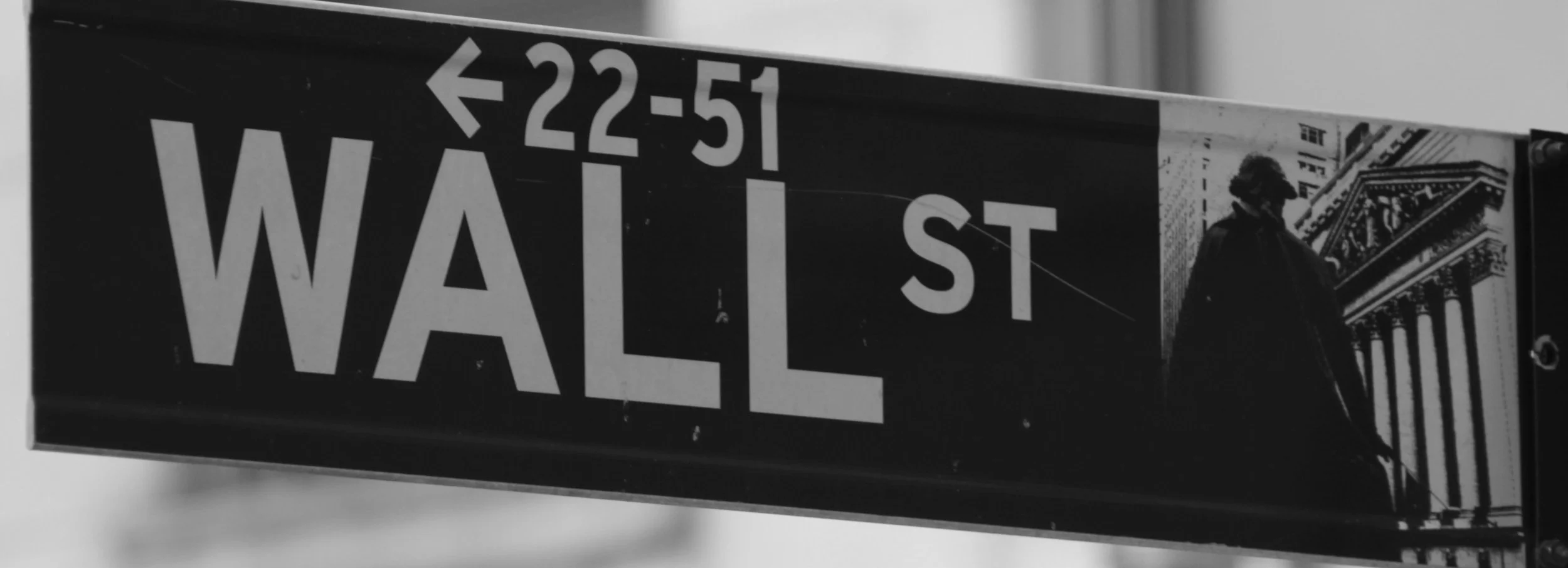
Now, I know we’ve been working through the fundamentals together, talking about budgeting the last time we met. But I’d be doing you a disservice if I didn’t stop to address what’s happening in the world right now. This news is too relevant to our journey to ignore, so consider this a short detour.
War has a way of making long-term plans feel suddenly fragile. Markets turn volatile, headlines become fear-driven, oil prices jump, inflation expectations shift, and even the most disciplined investors can start questioning everything.
That’s roughly where we are right now.
In late February, US and Israeli forces launched strikes on Iran, triggering one of the largest oil supply disruptions the world has seen in decades. The Strait of Hormuz (the Channel where around 20% of the world’s daily oil and gas supply flows through) being effectively closed. Oil has spiked. Inflation fears are back in full force. And the global stock market has fallen.
My carefully constructed, boring, beautiful index fund portfolio? Yeah, it felt it too.
And I’m guessing many investors out there are staring down some blood red days right now, quietly asking the same questions: Should I keep Investing? Should I hold more cash? What if the market keeps on falling?
These are the moments where financial plans are truly tested Because it's easy to stay committed when markets are climbing and everything feels predictable. It's another thing entirely to stay the course when the world feels unstable and every headline is screaming crisis.
But here's what I keep coming back to: this is exactly the moment the FIRE philosophy was built for.
Not because it plans for Wars. It doesn’t. But because the entire Framework (high savings rates, low expenses, long time horizons, and diversified, passive investing) was never designed for a predictable world. That would be too optimistic. Frankly, it would be unrealistic.
So, before you open your brokerage app again, let's talk about what's actually happening, what history tells us about moments like this, and more importantly, what you should (and shouldn't) be doing about it.
Spoiler: it's probably less than you think.
Why War Shakes Markets
It’s Ironic. Markets thrive on predictability, but truthfully, a market is anything but predictable. What markets thrive on, is the illusion of predictability. War, and other geopolitical conflict simply breaks this illusion, and we see it for what it is: unpredictable.
Think about what a market actually is at its core. Millions of people, institutions, algorithms, and funds all making bets on the future. Not the present. Stock prices don’t reflect what a company is worth today. They primarily reflect what investors believe it will be worth tomorrow, next year, and a decade from now. The entire system runs on confidence and assumptions. Confidence that supply chains will hold. That energy will flow. That the future will look roughly like today.
War doesn’t just threaten those assumptions. It obliterates them.
Overnight, rules change. Energy routes that were once open are suddenly closed. Inflation forecasts spike, and the carefully constructed models that institutional investors use to price everything from your index fund to government bonds suddenly have a variable in them that no one can truly quantify: uncertainty. Uncertainty in how long this conflict will last, how bad will it get, and what are the long-term consequences of this conflict.
That uncertainty is the real enemy of markets. Not the war itself, but the unknown shape of it.
So what happens?
People sell. Not necessarily because the underlying businesses they own have become less valuable, not because companies have ceased generating revenue. Instead, there is an absence of certainty and cash ends up looking quite attractive in the short-term. It all comes down to human psychology. I mentioned early on that we humans are deeply emotional creatures, and Fear in particular is one of the most powerful and primal instincts we have, hardwired into us though thousands of years of evolution. It kept our ancestors alive. But in the context of investing, it tends to cost us money.
Fear is contagious in a way that logic simply isn’t, and when enough people act on that fear simultaneously, prices fall regardless of fundamentals.
Now this is where it gets important for investors. What looks like rational market response is often just collective anxiety wearing a suit. The businesses inside your index fund are still open. They’re still serving customers, generating revenue and paying staff. The intrinsic value of a well-run global company doesn't evaporate because a conflict broke out in the Middle East. But the price you can sell it for today? That reflects the mood of the market. Right now, the mood is rattled.
What does this mean for Your Saving Rate
Forget the downturn in the stock market for a moment.
The red portfolio days are painful, sure, but they’re also somewhat abstract and are only locked in if-and-when you sell. What isn’t abstract is paying more for petrol on the way to work this morning or having to cough up some extra cash to cover the increase in your weekly grocery bill. That's where this conflict is hitting most people hardest, and it's the part of the conversation that doesn't get enough airtime.
While you may not be directly invested in oil, you are buying groceries. You are filling up your car. Unfortunately for us, the increased cost of oil gets passed on to us consumers so that companies can still turn record profits.
Oil feeds into almost everything. Fertiliser production, Heating, Electricity, and Freight. This means that the cost of getting food from farm to shelf goes up before it even reaches your trolley. This is different from a stock market in the sense that it isn’t speculation. It’s the mechanical reality of an energy-dependent food system. At the pump, the story is the same. Country petrol stock has fallen, prices have surged to heights I have never seen in my lifetime. Here is Auckland, we’re seeing prices pushing $4.00 in some places. Taken together, the compounding effect in your monthly budget is real. Enough to erode your savings rate if you are not paying close attention.
I’m glad we covered budgeting last time, because this is exactly where those skills become useful. Groceries, energy bills, and transport are non-negotiables. You can't cut them the way you can cut a streaming subscription or a dinner out. But you can be aware of what's happening and make deliberate, calm adjustments rather than reactive, panicked ones.
Overall, your progress may be slower during unprecedented times like this, but it’s still progress. If your savings rate dips from 40% to 30% for six months because to cost of living has genuinely increased, that is not a failure. It’s your plan adapting intelligently to real-world conditions. And remember, this is only temporary. Geopolitical shocks, as painful as they feel, have historically resolved.
How Downturns can Help Long-Term FIRE
Let's shift our focus back to the markets, because what's happening right now might actually be one of the best things for your long-term portfolio. Counterintuitive? Absolutely. But stick with me.
First, a reminder: the number on your screen is abstract. You haven't lost a single dollar until you sell and realise that loss. Panic-selling turns a temporary dip into a permanent one. So the question isn't should I get out. It's should I keep going?
The answer, historically, is a resounding yes.
Let’s go back to October 1929, the beginning of the Great Depression. Over the following 3 Years, the S&P500 fell by roughly 83%. Let’s assume that I was alive and I invested $100 right before the crash. But I don’t freakout, instead I invest an extra $10 dollars every month for the next 31 Years. By the time I want to sell, my portfolio value would have grown by 280%.
Fast forward to March 2000, the Dotcom Bubble popped. $10,000 invested at the absolute peak, with committing to putting $1,000 into the S&P500 every month until today. Despite living through the dotcom bust, the 2008 financial crisis, and a global pandemic, that portfolio would sit at a 291% total return. The lesson isn't that crashes don't hurt, because they do. The lesson is that the market has a remarkable long-run tendency to not just recover, but to reach new heights.
Stocks are on sale – That’s a good thing
When markets fall, investors tend to say that stocks are “on sale.” That’s not just a phrase. It reflects something real. Every company you’re buying into has an underlying value: its assets, earnings, and future growth potential. That true intrinsic value doesn’t just evaporate because sentiment turned sour or a War rattled traders. The price drops, but the business doesn’t.
This is where Dollar Cost Averaging, or DCA, becomes a handy ally. Rather than trying to time the bottom (something even professional fund managers fail to do) DCA means that you invest a fixed amount on a regular schedule regardless of what the market is doing, like my example above of committing to invest $1,000 a month throughout the downturns, and upturns starting with the Dotcom bubble burst. Effectively, you end up averaging the price you pay for a share. For example, if you buy Stock A at $100, and then it drops to $50 where you buy again, the average price you paid for those two shares is $75.
A downturn like this isn’t just survivable but rather is an accelerant for a long-term DCA strategy. Every monthly contribution during a crash is buying more shares at a discount, shares that will appreciate when the market inevitably (at least history has shown that it is inevitable) recovers.
Staying Rational in Irrational Times
The Market is emotional right now. You don’t have to be. Here are a few ways I keep my head on while everyone around is losing theirs:
I Don’t stop Investing: The instinct to pause, to wait and see how things pan out, feels responsible. But it can lead to missing out on some positive gains in early recovery. I learnt this rather quickly in my early investing days where I tried waiting for the COVID crash to bottom out and missed out on practically doubling my return if I had just kept investing, and Dollar Cost Averaging throughout the months.
I Don’t doomscroll: There is a version of staying informed, and there is a version of consuming a continuous drip of worst-case scenarios until your risk tolerance collapses. The financial media has every incentive to keep you anxious — anxiety drives clicks. Instagram, Tiktok, and Facebook are notorious for this. The endless scroll with every second post being from one of the financial pages you follow feeds your growing anxiety. But anxiety also drives poor financial decisions. Set a limit. Read one or two quality sources. Then close the tab and go live your life. Your portfolio doesn't need your attention every hour. It needs your contributions every month.
Review The Budget: Don’t panic audit. Look at your numbers and ask honestly whether your current budget is sustainable given the increased cost of living. If it isn't, adjust. Remember what we talked about last time — it's not worth sacrificing your quality of life over an extra $100 or $200 a month in genuine needs. Lowering your savings rate slightly in the short term to meet your real needs will not dramatically alter your FIRE timeline. What would alter it is making fear-driven decisions that lock in permanent losses.
Wars end. Oil shocks resolve. Markets recover. Not always quicky, but they tend to do. At least that is what history shows. The investors who come out the other side in the strongest position are rarely the ones who made the boldest moves during the chaos. They’re the ones who did the boring thing. Who kept contributing, who didn’t sell, and who trusted the framework they built during the calmer times to carry them through the turbulent one.
Remember, the path to Financial Independence is not a get-rich-quick scheme. It’s a path built on patience and consistency.
The world is on Fire right now, but your plan doesn’t have to be.
I'd love to hear from you — how are you personally navigating the current market volatility? Have you made any changes to your investment strategy or budget, or are you staying the course? Drop your thoughts in the comments below.
